Drying wood in microwave?

Just before winter last year I was fortunate enough to get hands on some small basswood logs from a tree that was standing in front of our flat in my hometown. Because a pyrographer like myself can never have enough of wood in his possesion I decided to make some cross-cut rounds from thick branches and dry them myself.
Hooray, Lucky me
The story began when our building manager decided that it was time to cut down some disturbing trees in the surroundings of the flat that I used to live in my hometown. Soon as my lovely mom found out, she called me and asked me if I was interested in some wood logs from trees that were about to be cut down. I never in my mind thougt that I could be so lucky and get some wooden logs in this way. The best part was that I didn’t knew at that time that she was talking about basswood or linden tree. Which in my country is almost impossible to get or buy it at the reasonable price. And for the cherry on top, the logs were for free!
Got my logs and now what?!
As a very lucky and proud owner of fresh basswood logs I first had to make some plans on how to use them and how to cut them apart. Because I don’t own any band saw yet I decided to make some cross-cut rounds from two thick branches so that I could start burning some designs right away.

Just when I made my first rounds I realized that the wood needs to dry out before I can use it for my next projects. So my next logical step was to ask dr.Google for any good helpful advise. Browsing from one page to another I discovered that there are quite number of people out there who are drying pieces of wood at their homes. Some of them eaven use home cooking appliances to speed up the process 🙂
Let the cooking begin
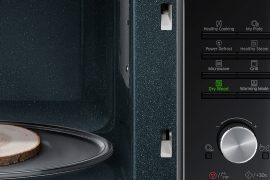
Finally I found a way to reuse some old microwave that I bought five or six years ago. It was originally meant for making some custom silicone fishing baits so it was just laying around and was a great spot for collecting some house dust.
After watching some of the videos on YouTube I felt confident enough to try it for myself.
Preparations
Unfortunately I don’t have any moisture meter so the entire process will be described and operate with weight data only.
Before I started my “MasterChef – Cooking with wood” experience I had to write down starting weight for each piece. The lightest was 99 grams and the heaviest was 230 grams and the average weight of the 17 pieces was 160 grams.
Drying process
My plan for drying process was to put each piece of cross-cut round in the microwave individualy for 2 minutes and 30 seconds at half power, which in my case was 380W. After all 17 pieces were cooked I then weighed them again and started another cooking cycle at 380W. The idea was to repeat this process until the difference in weight loss between two drying cycles would be very minimal. After I completed second cycle I noticed that in some pieces very small crack appeared in the centre so I turned the power down to 250W to avoid any more damage.

Weight of individual piece depending on power and after drying time:
I. Starting weight
II. Weight after first cycle on 380W
III. Weight after second cycle on 380W
IV. Weight after third cycle on 250W
V. Weight after 48h
V. Weight after 96h
VII. Weight after 144h
AVG. Average weight
After finished third cycle of drying in microwave I decided that it would safer to continue drying wood on room temperature, before I overcook my new wooden delicacy and ruin this new basswood rounds.
Cooking can be fun
For better understanding on how the weight decreased after using microwave and after drying wooden cross-cut rounds on room temperature I made a simple comparison graph between heaviest and lightest in the pack.
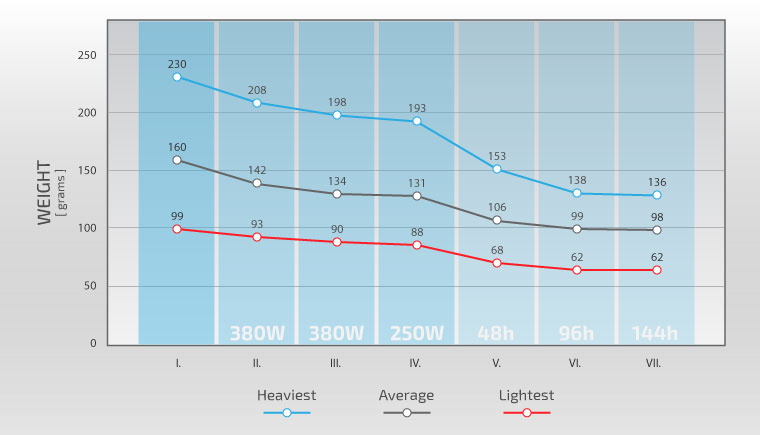
When drying wood in the oven each piece was spinning in the microwave for 2 minutes and 30 seconds and then rested for about an hour before next carousel ride. The heaviest piece started with a weight of 230 grams and ended the ride in microwave with 193 grams, so it lost 16% of moisture. The lightest started out with 99 grams and ended with 88 grams, which means it lost only 11% of moisture. They both lost little less than the average weight loss, which was 18%.
After changing from microwave to drying wooden rounds on room temperature you can see that the moisture loss dropped for 15% on average after first 48 hours and then started to flatten out.
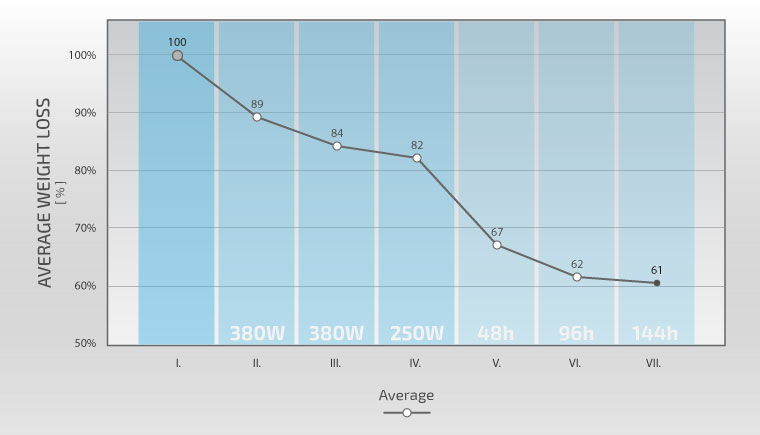
When comparing the average weight loss in the microwave to average weight loss when drying wood on room temperature you can see that the average value in both cases was around 20%. You have to bare in mind that the drying process in oven for each piece took 7 minutes and 30 seconds cooking in oven and air-drying outdoor for about 3 hours. Drying indoor on room temperature afterwards took another 144 hours or 6 days. So the wood had more then enough time to slowly lose all of its excess moisture still left inside.
After losing almost 40% of its original starting weight the wooden cross-cut rounds were ready for sanding and for new burning projects.

The dinner is served, here is the recipe
It can be done. You can save some money by drying wooden cross-cuts in your old microwave by yourself. In my case the wood lost almost 40% of its moisture and it’s really nice to work with. With this results and numbers I can vouch only for drying basswood pieces that were around 1 cm thick and 12 cm in diameter. Which means you shouldn’t now start drying your 20 cm thick wooden pieces in the microwave and expect the same end results! If you decide to try it out for yourself I would suggest that you do it one piece at the time and after microwaving, let pieces dry out slowly somewhere indoors on room temperature.
What a great little cooking journey this was. Until next time stay safe and happy wood burning.
About Me

Chesung Subba
Author/Writer
Hello, I'm Chesung Subba, a passionate writer who loves sharing ideas, stories, and experiences to inspire, inform, and connect with readers through meaningful content.
Follow Me
Connect with me and be part of my social media community.